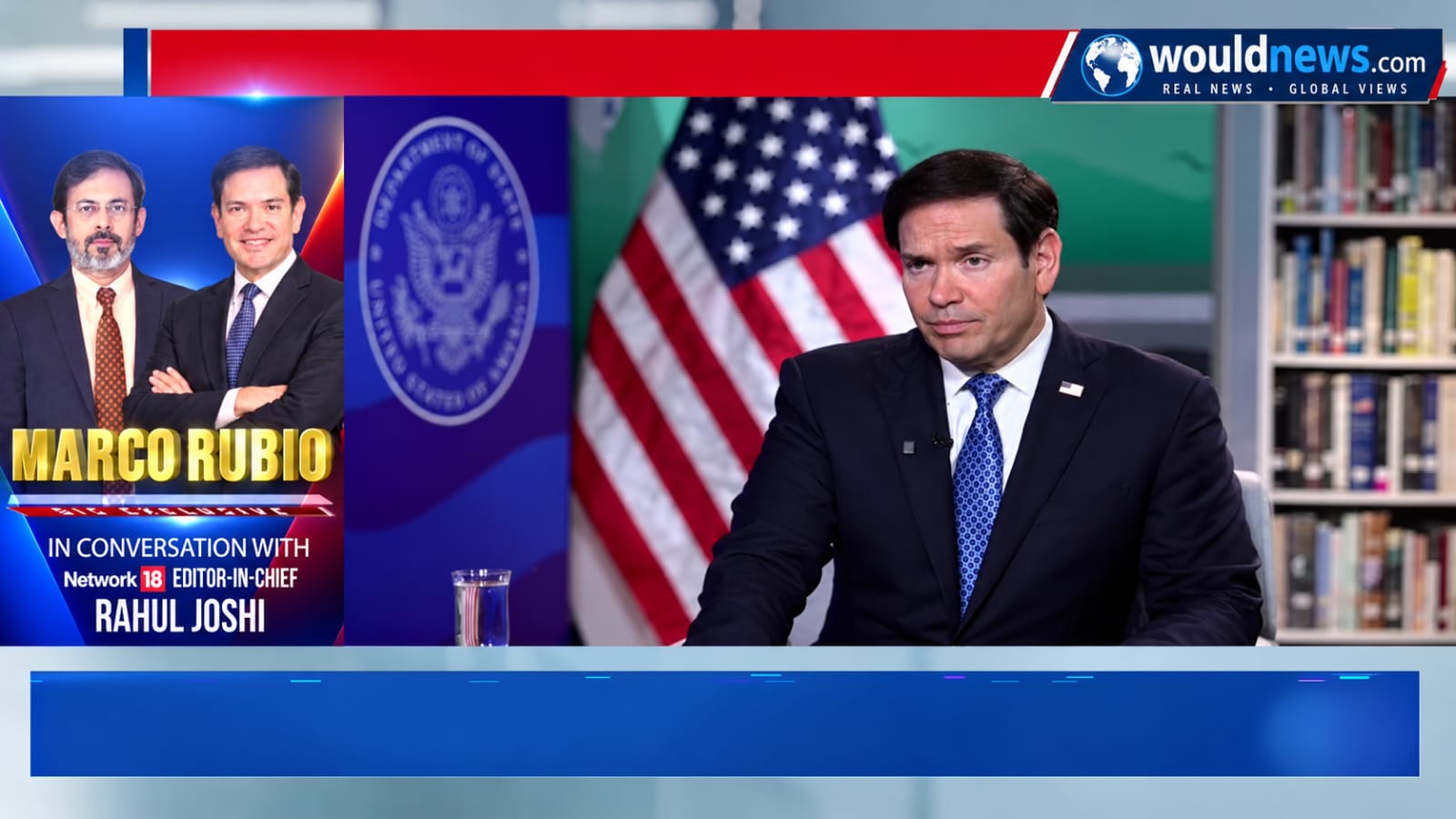
What happened during Field Marshal Asim Munir’s visit to Iran and why is it important?
Pakistan Army Field Marshal Asim Munir has met with President Peshmerga and Speaker of Parliament and other senior officials in the Iranian capital Tehran, in which, according to Iranian media, the regional situation and Pakistan-Iran border issues were also discussed.
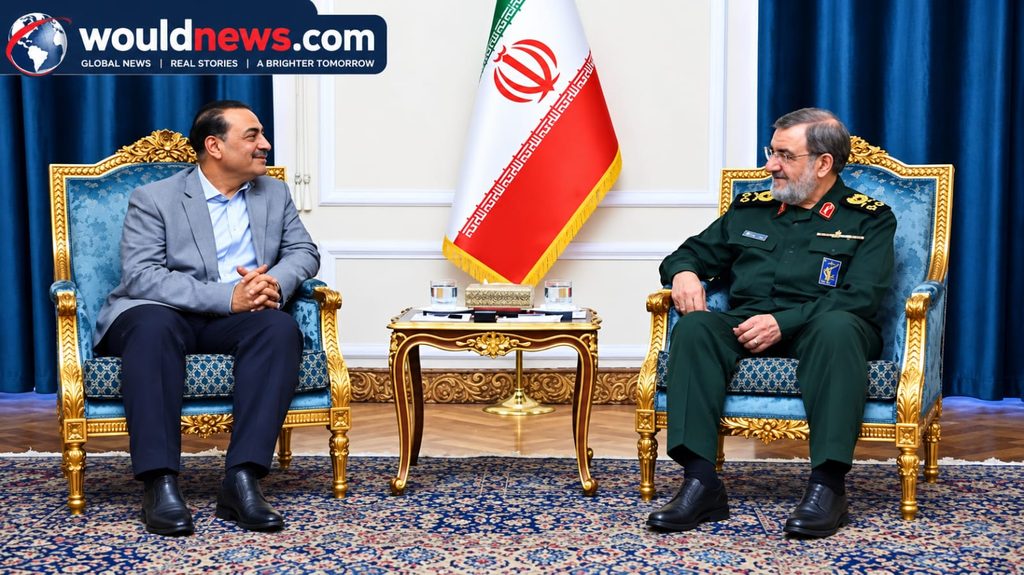
This is the Pakistani Field Marshal’s fourth visit to Iran since the start of the Iran-Iran war on February 28 this year, and Interior Minister Mohsin Naqvi is also accompanying him. Earlier, the Field Marshal had also visited Iran in April, May and August in connection with efforts to broker US-Iran talks.
No statement was issued by the Pakistan Army or the Ministry of Information regarding Field Marshal Asim Munir’s visit to Iran, however, the visit was widely covered by Iranian state news agencies.
The news of the Field Marshal’s arrival in Tehran and his meetings there also came out through Iranian media.
Pakistan’s Field Marshal Asim Munir has made this visit at a time when despite the ‘Islamabad Memorandum of Understanding’ signed between the US and Iran in June and several rounds of negotiations, a final agreement could not be reached.
The two countries continue to make harsh statements against each other, while on the other hand, fighting is also ongoing between Saudi Arabia and the Houthis.
During Field Marshal Asim Munir’s visit, Pakistani Foreign Minister Ishaq Dar said that Pakistan will continue its efforts to mediate between the United States and Iran.
Field Marshal Asim Munir’s busy day in Iran
Field Marshal Asim Munir arrived in the Iranian capital Tehran on Tuesday, accompanied by Interior Minister Mohsin Naqvi.
According to the Iranian state news agency IRNA, Field Marshal Asim Munir met with Iranian President Masoud Peshkeshian after arriving in Tehran.
According to Iran’s semi-official Fars news agency, President Peshkeshian told Field Marshal Asim Munir that for any kind of negotiations, it is necessary for the Americans to first end the pressure, threats and sanctions.
President Peshkeshian said, “Our nation does not trust the United States and believes that if we negotiate, they will attack us again.”
After meeting with the Iranian president, Field Marshal Asim Munir met with Iranian Parliament Speaker Baqer Qalibaf.
According to the Iranian news agency ‘IRNA’, in a meeting with Field Marshal Asim Munir, Baqer Qalibaf said that the United States cannot gain Iran’s trust until the seven conditions presented by Iran to the United States are met and Tehran has ‘nothing new’ to say to Washington.
Baqir Qalibaf said that ‘Iran does not like war, but it is fully prepared to defend its homeland and national dignity.’
The speaker of the Iranian parliament said that threats and military exercises cannot influence Iran’s strategic decisions.
Iranian news agencies also claimed that during these meetings, Field Marshal Asim Munir also announced the opening of the Iran border, which had been closed for five days. However, no official statement was issued by the Pakistani government or the army in this regard.
According to the Iranian news agency Fars, the Pakistan-Iran border remained closed until 9 pm on Tuesday. According to the Would News Mohammad Kazem in Quetta, the border remained closed on Tuesday and local authorities have not yet received any notification in this regard.
Field Marshal Asim Munir later met with Iran’s Secretary of National Security Mohsen Rezaei.
According to Iranian media, Mohsen Rezaei said that “not a single particle of enriched uranium from Iran will leave.”
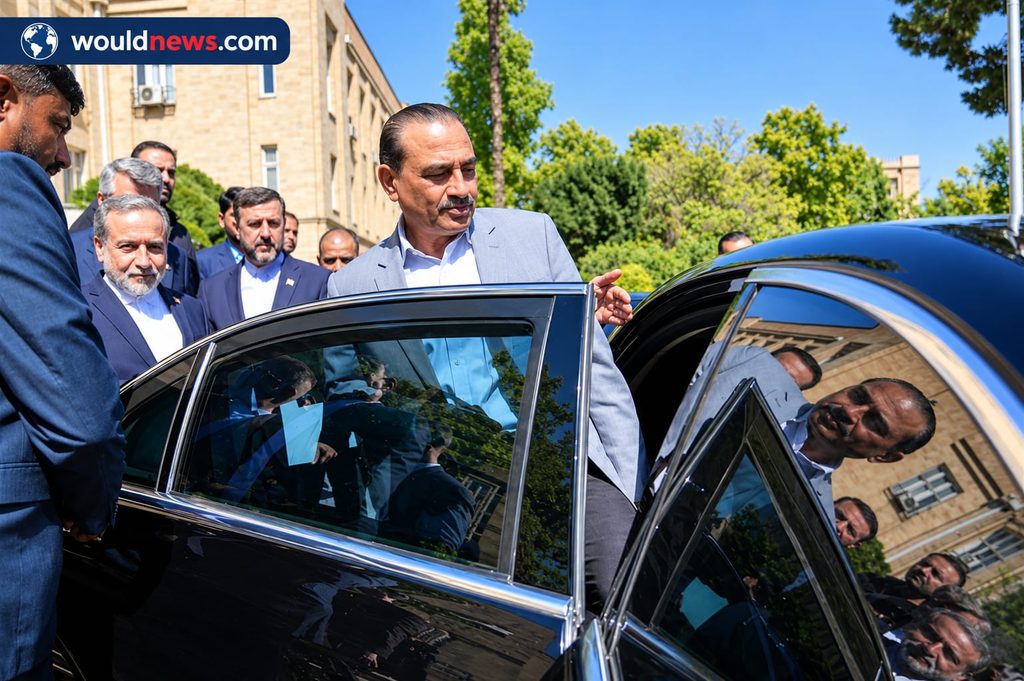
According to Fars News, Mohsen Rezaei said that the border issue between Iran and Pakistan has been resolved and all border points between the two countries have been reopened from today.
It is worth noting that Pakistan’s trade with Iran through key border crossings has remained closed for five days, severely affecting trade activities between the two neighboring countries via Balochistan and leaving hundreds of cargo containers stranded on both sides of the border.
Officials in Islamabad and Tehran confirmed the closure of the border crossings on Saturday, October 17, but the reasons for the seemingly sudden decision have been given by different sides. It is worth noting that both countries have stressed that the suspension is “temporary” in nature.
‘President Trump wants the Strait of Hormuz to be opened before the midterm elections’
What is the significance of the visit of the Pakistani Field Marshal to Iran on this occasion? And is there any possibility of any progress in the negotiations between the US and Iran once again? The Would News has spoken to experts on this issue.
It should be noted that Interior Minister Mohsin Naqvi, while addressing the Global Conference in Doha on Monday, had said regarding Field Marshal Asim Munir’s previous visits that these negotiations were very difficult.
He said, “There were some moments when the situation became very tense but we did not give up. We kept talking, listening and trying to build trust.”
He said that he can say based on his experience that ‘peace cannot be achieved in one meeting. It requires patience, trust and continuous efforts.’
Dr. Muqtadar Khan, a professor of international relations at the University of Delaware in the US, says that the US is going to hold mid-term elections next month and President Trump wants oil prices to come down before that so that the American people can get some relief.
Talking to Would News, he said that if the Strait of Hormuz opens before the US mid-term elections, oil prices could fall from $110 per barrel to $80 or $85 per barrel.
According to him, Field Marshal Asim Munir’s visit is a link to this, ‘But President Trump also wants Iran to show some flexibility on nuclear issues.’
According to Dr. Moqtadar, ‘Iran is also well aware of this and will never want the US to make any concessions that would benefit President Trump before the midterm elections.’
According to him, Field Marshal Asim Munir has met with leaders of both Iran’s political and military leadership. ‘This will not yield any immediate positive results, but it certainly indicates that diplomacy is still ongoing.’
‘Diplomacy is gaining momentum’
Dr. Farooq Hasnat, a Middle East expert and former head of the Punjab University Political Science Department, says that the diplomatic efforts between the US and Iran have never ended.
Speaking to Would News , Dr. Farooq Hasnat agreed with Dr. Moqtaddar and said that he does not think that there can be any breakthrough before the US midterm elections.
Dr. Farooq Hasnat said that Field Marshal Asim Munir is still trying to reduce tensions between the two countries so that relations between Saudi Arabia and the Houthis can also improve.
According to him, the rising oil prices are affecting all countries of the world, Pakistan is also affected by it. Therefore, the Field Marshal is trying to open the Strait of Hormuz so that oil prices can come down.
Dr. Farooq Hasnat says that Iran has repeatedly convinced that it wants a settlement, but attempts to establish peace cannot be made through intimidation and threats.
Reaction on social media
Dani Satrinoftash is an expert on Iran, national security and intelligence affairs and a senior fellow at the Institute for National Security Studies (INSS), an affiliate of Tel Aviv University in Israel.
According to him, in recent days, diplomatic activities have significantly accelerated between Iran and the United States to prevent another potential military confrontation.
In his comments on the social media platform X, he wrote that the recent visits to Tehran by key regional figures, including Field Marshal Asim Munir, and the statements of Iranian Foreign Minister Abbas Araqchi (that the Tehran leadership is reviewing the US response to Iran’s seven-point proposals) indicate that diplomatic efforts are underway to prevent further escalation of tensions.
However, they say that these activities should not be seen as a sign of any major diplomatic breakthrough, as the differences between Washington and Tehran are still very deep.
According to Satrenovtish: “It is important to distinguish between increased diplomatic activity and real diplomatic progress.”
They say that the activation of diplomatic contacts does not necessarily indicate that the differences between the two sides are decreasing, but rather that all parties involved are aware of the potentially disastrous consequences of a new military confrontation.
Researcher and commentator Babak Wahdad says that Islamabad is currently trying to balance the pressure coming from two different directions.
In a post on social media platform X, he wrote that on the one hand, there is a risk of Pakistan becoming involved in the Yemen conflict after joining the ‘Mecca Agreement’, which could have an impact on relations with Tehran.
On the other hand, Pakistan is also playing the role of an important mediator between Iran and the United States, which Iranian officials have been publicly acknowledging in recent days.
According to Babak Vahdad, the Iran-Pakistan border is also an important issue, as the recently temporarily closed Gabd-Rimdan crossing was an important route for the delivery of supplies for Iran.
According to political and strategic affairs researcher Mohammad Saleh Sedqian, the visit of Pakistani Army Chief Field Marshal Asim Munir to Tehran is a continuation of the ongoing mediation efforts by Pakistan and Qatar to end the war between Iran and the United States, resolve the crisis, open the Strait of Hormuz, and lift economic sanctions on Iran.
According to Sedqian, the visit of Russian Foreign Minister Sergei Lavrov to Tehran yesterday is not an alternative to the mediation of Qatar and Pakistan.
He says that Tehran has ‘welcomed the Russian proposals and has not opposed Pakistani mediation.’
However, according to Sedqian’s analysis, ‘Iranian officials maintain that the matter is now not in the hands of Iran but of US President Donald Trump, and it is not yet clear what Washington actually wants.’
Mohammad Saleh Sediqian believes that the purpose of Pakistan’s Field Marshal Asim Munir’s visit to Iran is to advance the negotiation process and try to prevent any “possible military escalation.”